
RBI’s 25 bps Repo Cut Isn’t the Story — Transmission Is
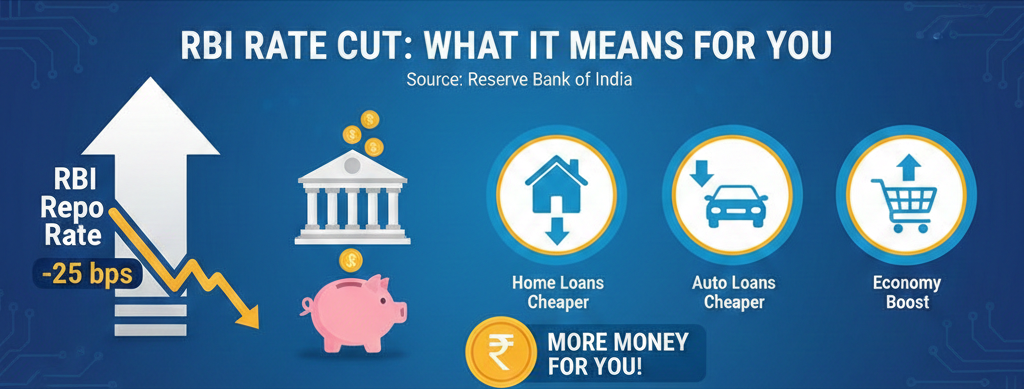
On December 5, 2025, the Reserve Bank of India (RBI) reduced the repo rate by 25 basis points to 6.25%, a move that caught the attention of markets and businesses alike. At first glance, a rate cut signals monetary stimulus aimed at sparking growth. But Noblegate Consulting’s nuanced analysis reveals that the repo cut itself is only part of the story. The real determinant of its impact lies in how effectively the rate cut transmits through the banking system to fuel lending, credit flow, and ultimately, economic growth.
What RBI Is Really Signalling
The headline of “repo rate cut” can be misleading without context. RBI’s decision and commentary reveal three key signals:
● There Is Inflation Headroom, But Moves Are Measured Inflation has cooled significantly, with RBI’s forecasts approaching 2%, allowing some policy easing. But the move is cautious, not aggressive, reflecting the central bank’s focus on stability.
● Growth Is Normalizing After a Strong First Half RBI acknowledges that the robust growth pace seen in the first half of the year is unlikely to repeat. The central bank is therefore adjusting policy to protect downside risks rather than spur a growth surge.
● Transmission to the Real Economy Remains the Key Challenge RBI highlights that India’s monetary transmission—the pass-through of policy rate changes to actual lending rates—is historically partial and slow. Without effective transmission, a cut in the repo rate remains only a formal gesture without real impact.
How 25 bps Turns Into Real Growth — Or Doesn’t
In theory, the repo rate cut should lower system funding costs, pushing banks and NBFCs to reduce lending rates. This should increase credit affordability, boost demand for loans, and ultimately spur consumption and investment. The chain looks like this:
Repo cut → Lower system funding cost → Reduced lending rates → Higher credit demand → Increased consumption and investment
This chain can break down for several reasons:
● Sticky Deposit Rates: Banks may hesitate to lower deposit rates, protecting margins by keeping lending rates relatively high.
● Cautious Risk Appetite: Banks might lend only to prime borrowers, limiting credit flow to MSMEs and riskier but productive sectors.
● Credit Composition Shifts: Increased credit might flow to unsecured or speculative segments, leading to future asset-quality issues (NPAs).
RBI’s liquidity measures like Open Market Operations (OMO) and FX swap support aim to ease this transmission by ensuring adequate liquidity, but the onus is on banks and NBFCs to pass on the benefits.
Who Gains and Who Trades Off in the Next 1–2 Quarters.
Households could benefit through lower EMIs on floating-rate loans and moderate improvements in housing affordability—boosting consumer sentiment. But savers might see softened FD and term deposit yields if easing continues.
For MSMEs, the cut can ease working capital interest costs and improve cash flow, encouraging inventories and hiring. Large corporates get easier refinancing terms but won’t commit to new capex without clearer demand.
Banks may see loan volume growth but face margin pressure if deposit repricing lags. Treasury arms could profit from falling yields. NBFCs, which often transmit rates faster, rely heavily on sustained market liquidity.
Sector Effects to Watch
● Housing & Construction: This sector is most sensitive to rate changes. Developers can gain from cheaper borrowings but must maintain discipline to keep affordability gains real.
● Consumer Discretionary: Impact will be modest unless job and income expectations improve.
● Manufacturing / Capex: Financing costs marginally improve; real action depends on existing order books.
Future Scenarios to Monitor
Over the next year, three possible outcomes based on transmission effectiveness emerge:
● Good Transmission (Bullish): Retail and MSME lending rates drop meaningfully within 2–3 months, credit extends beyond prime borrowers, and growth stabilizes with housing and investment gains.
● Headline Cut, Weak Pass-Through (Base/Bear): Partial transmission leads to limited credit rate relief for MSMEs and primarily market sentiment benefits only.
● Bad Credit Mix (Risk): Credit grows but concentrates in unsecured, higher-risk pockets, resulting in a near-term growth uptick but longer-term asset-quality risk.
Indicators To Track in Coming Months
Key performance indicators (KPIs) to watch for assessing transmission and impact include:
● Bank lending rate benchmarks (EBLR/MCLR) and average new loan pricing.
● Borrowing spreads for NBFCs.
● Share and quality of unsecured retail versus SME and capex credit.
● Early delinquency rates (30+ days past due) in unsecured loans.
● Housing registrations and mortgage disbursals.
● Core industrial activity and capacity utilization.
● Macro risks like food inflation, crude oil prices, and INR volatility.
What Decision-Makers Should Do Now?
CFOs and Business Owners:
● Actively reprice and refinance working capital and term loans.
● Stress-test finances against interest, oil, and currency shocks.
● Base inventory and capex on real demand—not just cheaper credit.
Bank/NBFC Leaders:
● Balance growth ambitions with underwriting discipline.
● Use liquidity windows to lower funding costs and selectively pass on cuts without marginalizing credit quality.
Household Borrowers:
● Understand your floating rate reset timelines and mechanisms.
● Compare loan spreads carefully when borrowing; small differences have large long-term effects.
The RBI’s 25 bps repo rate cut draws headlines, but the real story lies in policy transmission. If this easing flows fast and broadly into MSME and mortgage lending, and credit remains targeted at productive uses, India can expect a smoother growth journey over the next year. Otherwise, it risks becoming a well-timed signal with limited punch for the real economy.
At Noblegate Consulting, we work where policy meets execution—helping lenders, NBFCs, developers, and operating businesses translate macro moves into measurable outcomes. In the months ahead, we’ll be focused on the same thing the RBI is signalling: transmission—how quickly pricing resets, where liquidity actually flows, and whether credit expansion stays productive. If you’re navigating refinancing, portfolio repricing, underwriting guardrails, or growth plans under a shifting rate regime, our work is to turn this policy change into a clear set of decisions, dashboards, and actions—so the rate cut becomes real impact, not just a news cycle.